Nowadays, by using various application (social media, bank account, crypto mnemonic,...) we need separate password for each application. We have some scenarios may cause problem:
- We using duplicate password for multiple applications: we expose one that mean expose all
- We using many password and need to remember huge password
- We using paper or note app to remember them, it's note secure we need to trust (or backup) note app, or missing paper
Today, I will describe a method to create your own password manager secure with encrypted data and also easy to backup by store in Github
Guideline store your password using pass
Introduction
pass - which is a command-line password manager that follows the Unix philosophy of doing one thing well. "pass" is an open-source password manager that uses GnuPG (GNU Privacy Guard) for encryption and provides a simple and efficient way to store and retrieve passwords.
GnuPG - GNU Privacy Guard, is a free and open-source software suite used for secure communication and data encryption. It is a complete implementation of the OpenPGP (Pretty Good Privacy) standard, which provides cryptographic privacy and authentication for data and communication.
Store password using pass and gpg
Install pass command line tools:
Mac
$ brew install passUbuntu
$ sudo apt-get install passGenerate key using gpg
$ gpg --gen-keyFill your username, email, password. we will get id - we using id for init step pass
pub   ed25519 2023-06-18 [SC] [expires: 2025-06-17]
      3B82860BFE3B584389F8EDB1E8A5CD4E0812E50C
uid                      cuonghx <cuonghx@gmail.com>
sub   cv25519 2023-06-18 [E] [expires: 2025-06-17]
Initialize new password storage
$ pass init 3B82860BFE3B584389F8EDB1E8A5CD4E0812E50CRemember to replace your id below to initialize new password storage
Insert your password (fb, gmail,...) your want to store
- Insert your first facebook password
$ pass insert facebook/cuonghxAfter insert success we will get password store structure like that:
Password Store
└── facebook
└── cuonghx- Insert your gmail password
$ pass insert gmail/cuonghxPassword Store
├── facebook
│ └── cuonghx
└── gmail
└── cuonghx- Insert your second facebook password
$ pass insert facebook/user2Password Store
├── facebook
│ ├── cuonghx
│ └── user2
└── gmail
└── cuonghx- We can view password by using command
$ pass show facebook/cuonghx # for facebook password
$ pass show facebook/user2 # for user2 facebook password
$ pass show gmail/cuonghx # for gmail password
Using git for backup scenarios
Config your git repository
- You create your git repository (!recommend: private repository) for example
test-pass-storebelow
$ cd .password-store # Go to .password-store directory
$ pass git init # Initialize git repository
$ pass git remote add origin git@github.com:cuonghx1108/test-pass-store.git
Push your password into your Github
$ pass git push origin masterYou can see your password was encrypted
Push your gpg public key and private key
To able to backup your password when you loss pass config gpg config we need to push your gpg key pairs. Don't worry when attacker have key pairs because your password also protect by symmetric encryption your gpg password when we setup at first.
$ gpg --output pubic.gpg --armor --export 053BA4556D74C5DBCE0B36AED55334B441B8C166

$ gpg --output private.gpg --armor --export-secret-key 053BA4556D74C5DBCE0B36AED55334B441B8C166- Remember to replace by your
gpguserid
$ pass git add .

$ pass git commit -m "Import gpg key
pairs"

$ pass git push origin master
Backup password
We're going to delete pass and gpg config and try to backup password.
$ rm -rf .password-store .gnupgWe try to show password
$ pass
Error: password store is empty. Try "pass init".
We clone encrypted password in Github
$ git clone git@github.com:cuonghx1108/test-pass-store.git .password-storeWe need to re-import gpg key pairs also
$ gpg --import private.gpgWe view our imported password
$ pass show facebook/cuonghxTechnique describe
- How GnuPG secure your password and protect your password even if you missing your key pairs
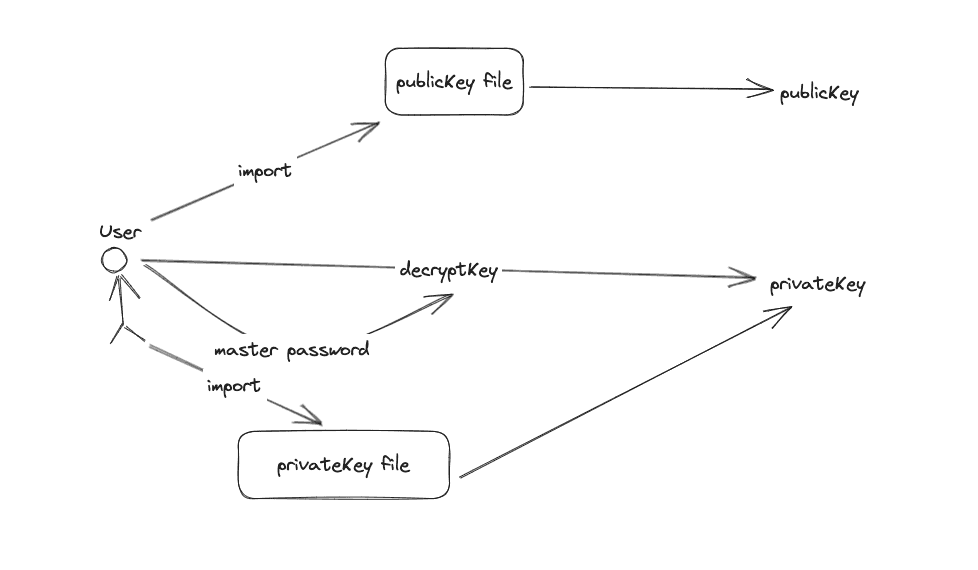
gpg decrypt key pairs using your master password - this password for gpg you fill at first steps
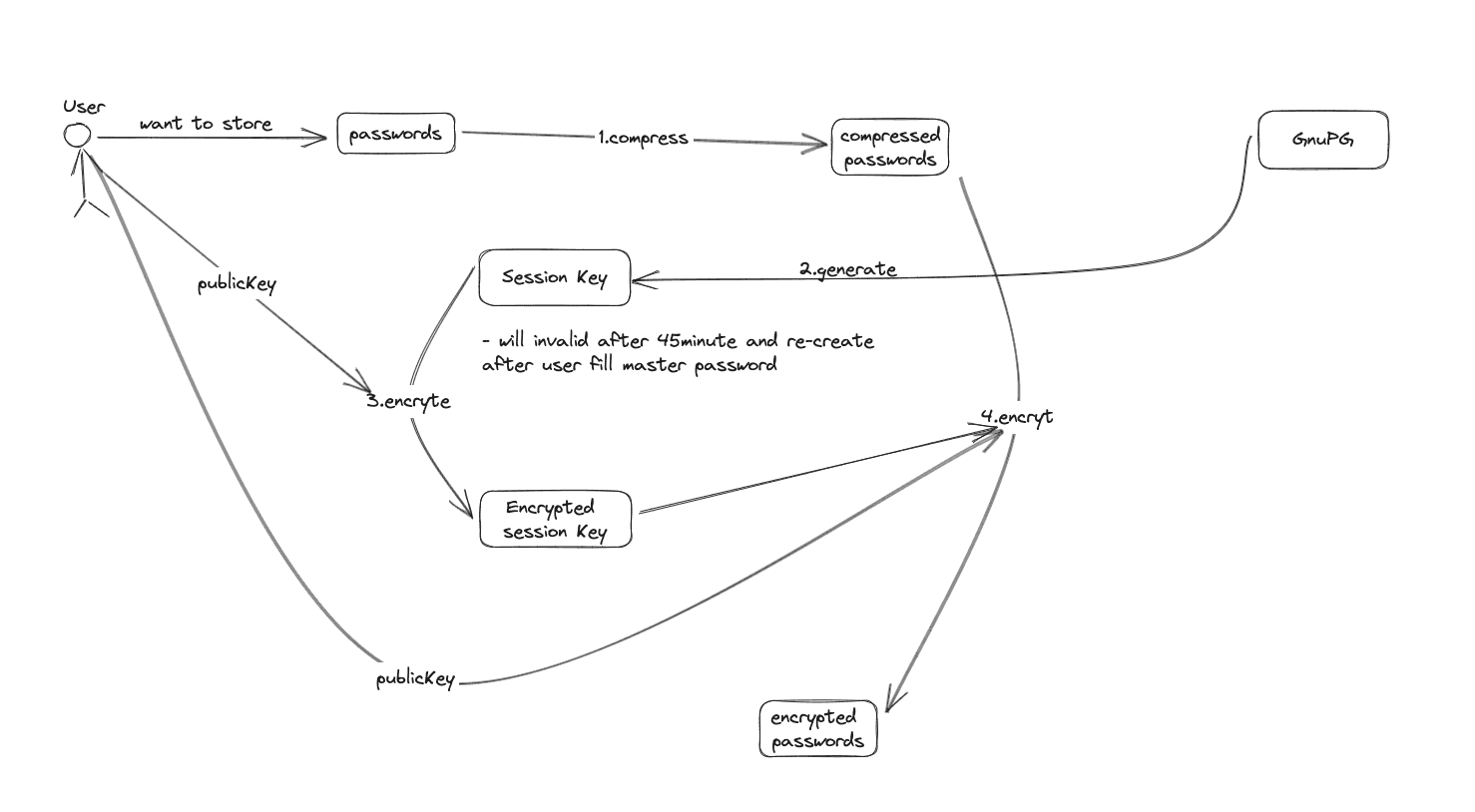
gpg encrypt key using your public key, this also generate session key and will be expired after 45 minutes
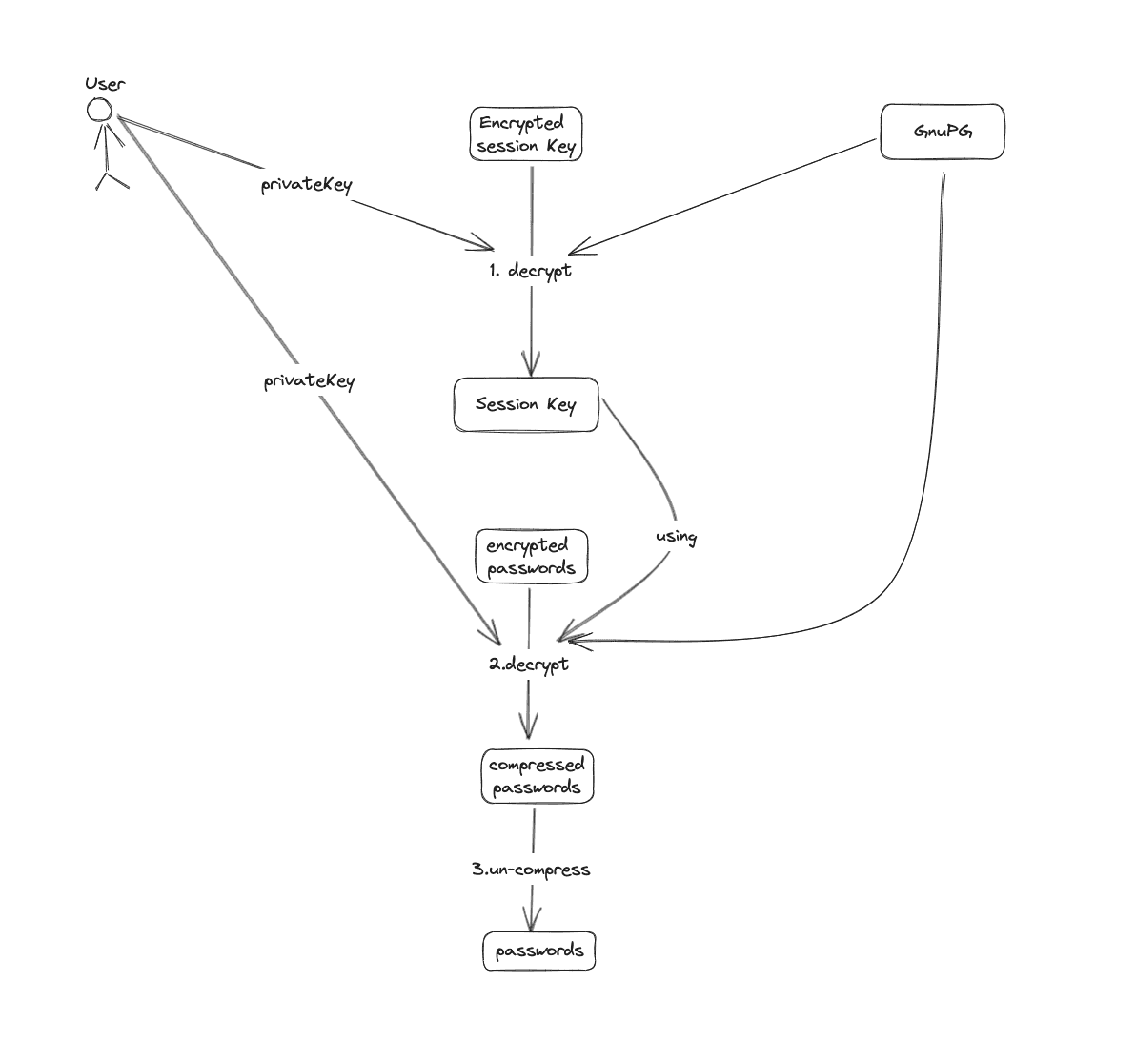
gpg decrypt key using your private key
The attacker want to get your password need 2 protected information:
- Your github repository (protect by private github repository)
- Your master password (only you know that)